Lincoln Park Coop - LPCNS
  • Home
  • ABOUT LPCNS
    • Our Mission
    • Our Cooperative Model
    • Our School
    • Our Staff
    • Diversity, Equity & Belonging
    • A Typical Day
    • Careers
    • Director's Blog
  • ADMISSIONS
    • PROGRAM OFFERINGS
    • TUITION & FINANCIAL SUPPORT
    • APPLY
    • TOURS
    • Non-Discrimination Statement
    • FAQs
  • DONATE
  • CONTACT

Director's Blog

Phase ii of the school year: autonomy

12/3/2022

0 Comments

 
Picture
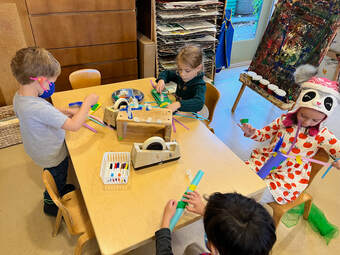
This next phase of the school year begins as children have successfully separated from their caregivers and transferred trust to their classroom teachers. All separation looks different, takes varying amounts of time and can certainly be an ebb and flow. But the hallmark is a child’s ability to say goodbye to their adult and cross the threshold into the classroom with little to no distress. Teachers use tools to help ease separation: notes to or from home, transition objects like lovies, or a separation plan which could include a special hug or kiss followed by a special story once inside the classroom. 

Teachers become a child’s go-to source of reference. They will seek out a teacher in moments of big feelings - joy or sadness - share in experiences like painting and building or ask for help with basic tasks like fastening buttons or dressing for outside. As this is occurring, teachers are setting up the environment to encourage children to become more autonomous. Children’s increasing comfort in the classroom lends itself to their ability to explore and engage in tasks independently. 

Classroom design is changing, too. Rather than the familiar and comforting activities that first lured them into the classroom, teachers are introducing new materials and children have a say in what is happening in various parts of the classroom. The dramatic play area is now transforming based on children’s interests. Hotels, animal hospitals, and restaurants draw on children’s love of pretend and acting out familiar scripts - building on themes like caregiving and familial roles. 

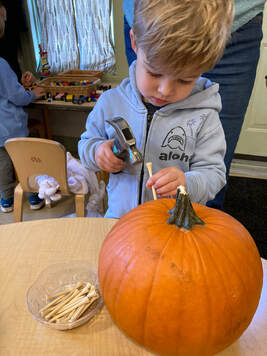
Opportunities for self-help skills are evident throughout the day. Children work to hang up their backpacks and coats as they arrive, dress themselves in their winter gear, and care for the classroom by participating in clean up as a group. Relationships between children, their teachers, and their peers are growing. Children reference one another in play, tune into each other’s feelings, and seek to make genuine connections. 

This phase of the school year will last the majority of the year, giving way to mastery - the phase in which children feel pride in “knowing how to be at school.” For now, let us relish in their growing comfort and competence, sharing together in the joy of preschool. 

0 Comments

Benefits of mixed age groupings

12/1/2022

1 Comment

 
The idea of a greater mixed age grouping is something we have thought a lot about in crafting new class offerings for the 2023-24 school year. We find great value in a mixed age classroom community. Here are some of the benefits we already see and know:
  • Development is not linear: children, even within a few months of one another, are developing at different rates and come to us with varying levels of abilities and knowledge. Each child will bring something different to the classroom community. Teachers are skilled at meeting the needs of each child individually within the context of a larger group. Our current class rosters include children across a wide age range already. 
  • Opportunities for older children: children on the older end of the age range can develop a greater sense of responsibility and leadership. They are able to model what they know for younger children, learn to adapt their behavior to meet the needs of a child not on their level, and build their autonomy as they grow more capable in the classroom.  
  • Opportunities for younger children: children on the younger end of the age range can learn and grow from observing older peers. They can be exposed to more sophisticated language and play skills and similarly work to adapt their interactions with older peers. 
So much of this already takes place in the classrooms now. Especially since the pandemic, we have children as old as Junior Kindergarten who have never been to school before. Though entry into school might look different by age, there are similar levels of learning and adjusting that happen as children transition to school and group life. Children who have been to school still work to learn the routine of the new classroom, how it feels to separate from a parent or caregiver, and internalize what it means to be at school.
Picture
1 Comment

    ABOUT

    Lincoln Park Cooperative Nursery School is a play-based, cooperative preschool in the heart of Lincoln Park.

    ARCHIVES

    November 2024
    October 2023
    January 2023
    December 2022
    September 2022

Picture

LINCOLN PARK COOPERATIVE NURSERY SCHOOL

1753 North Fern Court, Chicago, IL 60614
Phone: 312-944-5469
Fax: 312-526-3550

© Lincoln Park Cooperative Nursery School. All Rights Reserved. 

QUICK LINKS

​Donate
Contact
Privacy Policy

FOLLOW US

Picture
Proudly powered by Weebly
  • Home
  • ABOUT LPCNS
    • Our Mission
    • Our Cooperative Model
    • Our School
    • Our Staff
    • Diversity, Equity & Belonging
    • A Typical Day
    • Careers
    • Director's Blog
  • ADMISSIONS
    • PROGRAM OFFERINGS
    • TUITION & FINANCIAL SUPPORT
    • APPLY
    • TOURS
    • Non-Discrimination Statement
    • FAQs
  • DONATE
  • CONTACT